


The phrase “girlfriend experience” sounds like a marketing trick until you notice what it is actually selling. Not simply sex, and not quite a relationship: attention that feels personal, conversation without the uncertainty of dating, and a temporary version of closeness with a beginning and an end.
That combination is becoming easier to find, easier to arrange online, and less unusual to talk about. But calling the trend a symptom of lonely men is too neat. The more interesting explanation is that paid companionship turns several increasingly scarce resources into a service: time, emotional focus, social confidence, and the feeling of being wanted.
The product is not “a fake girlfriend”
Research has long treated the girlfriend experience, or GFE, as distinct from a purely sexual encounter. In her study of male customers, consumer researcher Aimee Dinnin Huff describes it as a co-created experience: the client is not only buying access, but participating in a performance of pleasure and emotional intimacy. The customer’s fantasy matters, but so does the provider’s ability to make the interaction feel responsive rather than scripted.
That helps explain why the experience can include dinner, messaging, affectionate language, or simply being listened to. A client may be paying for sex, but the emotional value often lies in the parts that are difficult to schedule elsewhere. A date with a stranger carries the possibility of rejection, awkwardness, and negotiation. A paid meeting replaces much of that uncertainty with an agreed frame.

That does not make the connection meaningless. It makes it conditional. The feeling can be real while the arrangement remains commercial, just as the comfort of a massage is real even though the appointment was purchased. The category error is assuming that “paid” and “emotionally effective” are opposites.
Why the timing feels right
The background condition is not mysterious. The World Health Organization’s 2025 Commission on Social Connection estimated that one in six people worldwide experienced loneliness between 2014 and 2023. It also cautioned that the available evidence does not prove a simple global trend of loneliness getting worse. That caveat matters: the story is not that modern life has made everyone lonelier every year, but that a large, persistent need exists.
Modern dating also makes connection expensive in a different currency. Apps provide abundance but demand sorting, presentation, patience, and emotional resilience. For someone who is grieving, working constantly, new to a city, socially anxious, or simply tired of performative dating, a defined companionship arrangement can seem more rational than another month of swiping.
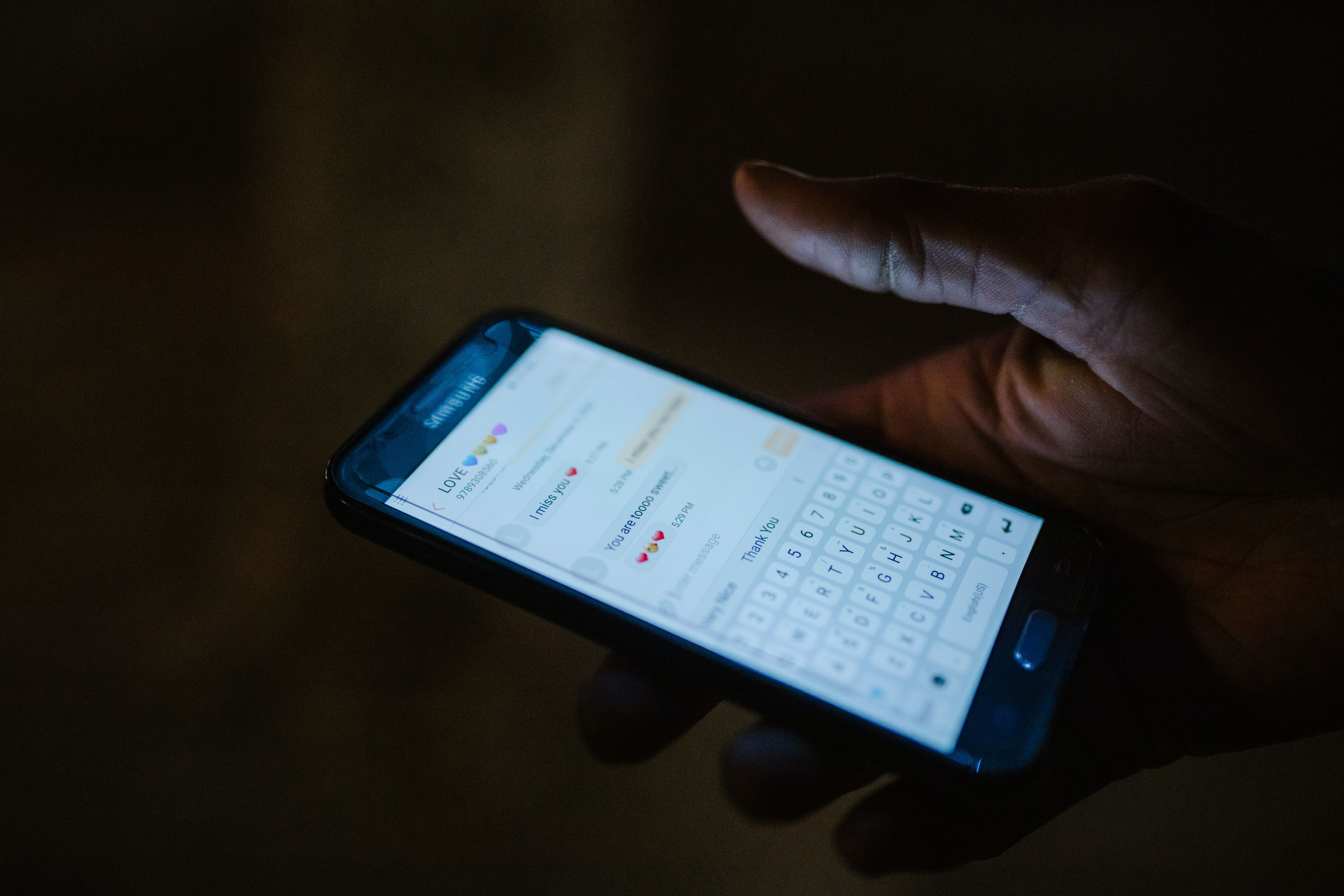
Digital communication intensifies the effect. A phone can make contact feel continuous without making it intimate. Paid messaging and pre-meeting conversation offer a controlled bridge between isolation and an in-person encounter. They let people rehearse trust, test compatibility, and receive a kind of immediate responsiveness that ordinary friendships may not reliably provide.
The psychological bargain: less risk, more intensity
Paid companionship works psychologically because it compresses the early stages of intimacy. There is no need to wonder whether the other person will answer, whether the evening is going anywhere, or whether a desire for closeness will be judged. Expectations are discussed in advance, which can make vulnerability feel safer.
That safety is also the limit. Ordinary relationships develop through unscripted reciprocity: both people can change their minds, disappoint each other, and still decide to continue. A paid encounter offers a more concentrated dose of attention, but it does not automatically create the shared history that makes a relationship durable.
A 2023 study of computer-mediated paid companionship, based on a survey of 178 users and interviews with 22 virtual lovers and customers, found that customers valued emotional benefits while reducing the affective costs of conventional intimacy. In plain English, the service offered the reward of an idealized partner without requiring the full exposure and obligation of a long-term relationship.
That is not necessarily hypocrisy. It is a trade-off. My view is that paid companionship should be understood less as counterfeit love than as a highly managed form of closeness. The ethical question is not whether the feeling is “real enough”; it is whether both people can consent to the boundaries without one side being pressured to pretend those boundaries do not exist.
The hidden labor behind “natural” chemistry
The effortless feeling is labor-intensive. Providers read moods, remember preferences, manage transitions, maintain safety, and decide how much personal disclosure is appropriate. They may offer warmth without offering unlimited access, which requires a sharper boundary than the polished date suggests.
Studies of GFE work in Spain describe this as emotional labor and focus on the shifting line between an intimacy that is sold and a private intimacy that is withheld. That line is not identical for every provider. Some emphasize authenticity; others use more deliberate role-play. Neither approach proves that the worker is deceptive. It shows that “authentic” is itself part of the service language.

This is where public discussion often becomes unfair. The client’s loneliness is treated as psychologically important, while the provider’s effort disappears behind the fantasy of effortless femininity. Any serious account of the market has to include safety, dignity, privacy, and the right to define what the appointment does not include.
When comfort becomes dependency
The strongest argument against romanticizing the GFE is not that paid intimacy is fake. It is that a reliable, concentrated experience can become easier to prefer than the slower work of building mutual relationships.
Recent research in Psychology & Marketing reported that paid companionship reduced immediate loneliness in controlled experiments, with the effect mediated by a stronger sense of social connection. The same study identified long-term risks, including emotional dependency and diminishing returns. That is a useful distinction: short-term relief can be genuine without being a complete solution.
A client who leaves feeling calmer has received something real. But if the arrangement becomes the only place where he can practice tenderness, conversation, or self-worth, the service may start to preserve the isolation it temporarily softens. The right comparison is not “paid companionship versus nothing.” It is paid companionship alongside the friendships, community, therapy, dating, or creative life that make connection less fragile.
A market for boundaries, not just affection
The newest way to understand the boom is to see boundaries as part of the appeal. A conventional relationship is open-ended; a companion arrangement can be scheduled, negotiated, and paused. For some clients, that structure is not a failure of feeling but a way to approach feeling without losing control.
For readers exploring the service in Munich, escort München is an example of how the language of companionship is presented alongside personal choice and direct communication. The same principle should govern any arrangement: expectations, consent, privacy, and limits need to be explicit rather than inferred from a romantic script.
Paid companionship is booming because it answers a real contradiction in modern life. People want intimacy, but many have less time, confidence, community, or tolerance for uncertainty than intimacy traditionally requires. The service resolves that contradiction temporarily.
Temporary is the key word. The healthiest interpretation is neither “this is love” nor “this is nothing.” It is a bounded human encounter, shaped by money but capable of producing real comfort. Its value depends on whether everyone involved can name the boundary, respect it, and avoid mistaking relief for a whole life.
How this article was researched
This article draws on the WHO Commission on Social Connection report published in June 2025; research on GFE consumption by Aimee Dinnin Huff; studies of emotional labor and intimacy in sex work; a 2023 ACM study of computer-mediated paid companionship; and a 2026 mixed-method study in Psychology & Marketing. The research base is still small and often focused on particular populations, so claims about a universal “boom” should be read as a market and cultural observation, not a verified global growth rate.